Uva Uvb Vivarium Light Explained: A UK Buyer's Guide
Key Takeaways
- Dual Necessity: A proper uva uvb vivarium light is non-negotiable for diurnal reptiles; UVA regulates behaviour and appetite, while UVB is critical for Vitamin D3 synthesis and calcium metabolism.
- The UK Climate Challenge: Because standard window glass filters out 100% of natural UVB, and British weather limits outdoor grazing, indoor enclosures require high-quality, artificial UV replication.
- Fixture Matters: Linear tubes, particularly an 18-inch reptile light fixture, provide a superior UV gradient compared to compact coil bulbs.
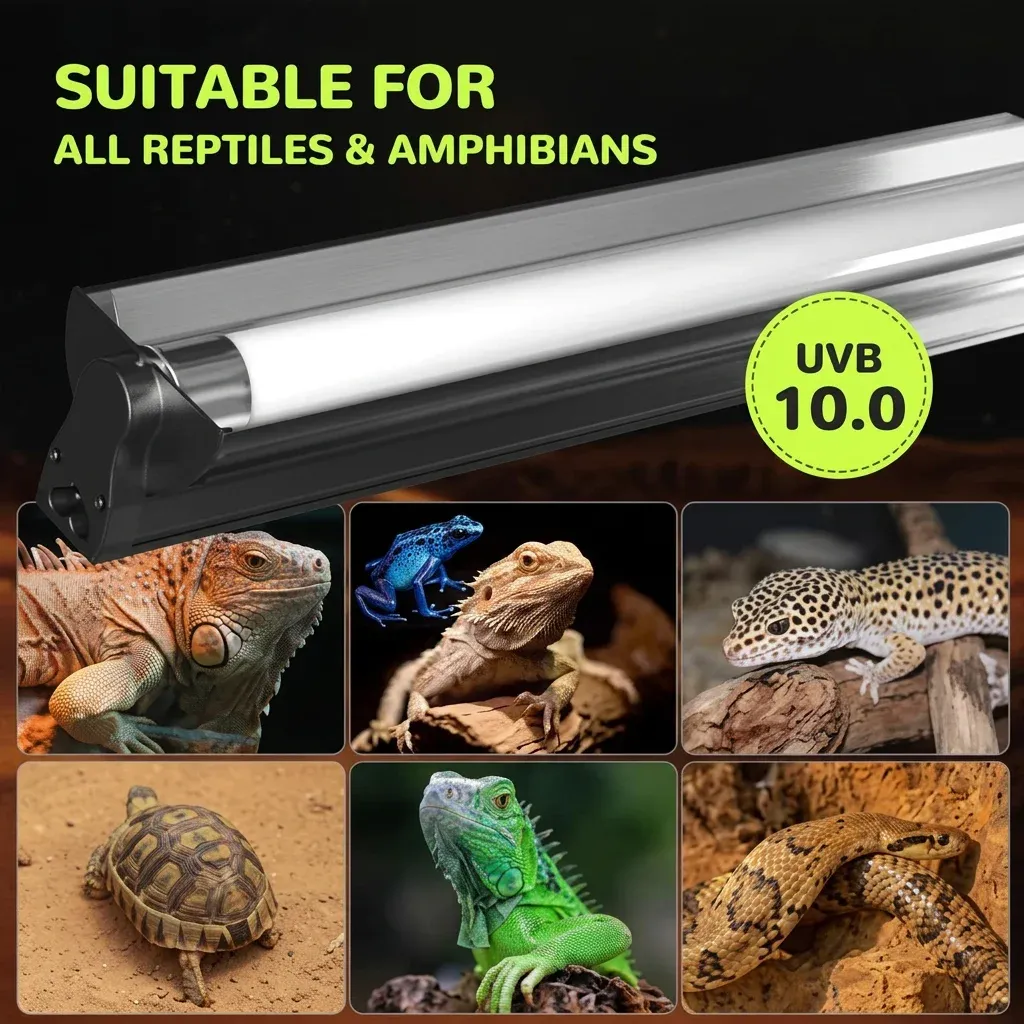
- Desert Species Requirements: Tortoises and bearded dragons require a high-output 10.0 UVB reptile lamp to mimic their natural, sun-drenched habitats.
- Replacement Schedule: UV phosphors decay over time; tubes must be replaced every 6 to 12 months, even if they still emit visible light.
The Critical Role of a Uva Uvb Vivarium Light
Replicating the sun inside a wooden or glass enclos one of the most complex challenges faced by British reptile keepers. Unlike mammals, diurnal reptiles—such as Mediterranean tortoises, bearded dragons, and uromastyx—have evolved under intense solar radiation. For these species, light is not merely for illumination; it is a fundamental biological driver.
A high-quality uva uvb vivarium light serves two distinct, life-sustaining functions. Understanding the difference between these two wavelengths is the first step in creating a thriving habitat for your exotic pet.
UVA: The Wavelength of Behaviour and Vision
UVA light (320-400 nanometres) is part of the visible spectrum for reptiles. While humans are trichromatic (possessing three types of colour receptors), many reptiles are tetrachromatic. They possess a fourth receptor specifically tuned to UVA light. This means a vivarium lacking UVA is, to a reptile, unnaturally dim and colourless.
Exposure to adequate UVA regulates circadian rhythms, stimulates appetite, encourages natural foraging behaviours, and is essential for species recognition and mating. Without a reliable UVA source, reptiles often become lethargic, lose interest in their food, and fail to thrive.
UVB: The Catalyst for Calcium Metabolism
UVB light (290-320 nanometres) is invisible to reptiles, but it is biologically essential. When UVB radiation hits a reptile's skin, it triggers the conversion of a cholesterol derivative into pre-vitamin D3. Through a process involving optimal basking temperatures, this is further metabolised in the liver and kidneys into active Vitamin D3.
Vitamin D3 is the key that unlocks the body's ability to absorb calcium from the gut. Without UVB, dietary calcium simply passes through the digestive tract unused.
"According to the British Veterinary Association (BVA), Metabolic Bone Disease (MBD)—a direct result of inadequate UVB lighting and calcium deficiency—remains one of the most common, yet entirely preventable, conditions treated by exotic veterinarians in the UK."
Symptoms of MBD include soft shells in tortoises, rubbery jaws in lizards, tremors, severe lethargy, and irreversible skeletal deformities. Providing a precise uva uvb vivarium light is the most effective way to prevent this debilitating condition.
Ferguson Zones: Determining Your Reptile's Needs
Not all reptiles require the same intensity of UV radiation. Herpetologists categorise reptile UV requirements using "Ferguson Zones," named after Dr Gary Ferguson, who mapped the microhabitats of various species.
- Zone 1 & 2 (Crepuscular/Shade Dwellers): Species like crested geckos and leopard geckos that require low-level UVB (typically 2.0 to 5.0).
- Zone 3 (Partial Sun/Open Basking): Species like Mediterranean tortoises and Rankin’s dragons.
- Zone 4 (Midday Sun Basking): Desert species such as bearded dragons and uromastyx.
For Zone 3 and Zone 4 reptiles, standard low-output bulbs are insufficient. These desert and scrubland species require a 10.0 UVB reptile lamp to safely replicate the intense solar radiation of their natural habitats. Installing a 10.0 uva uvb vivarium light ensures they receive the dense photogradient required to metabolise calcium efficiently.
Linear Tubes vs Compact Bulbs: Which is Superior?
When selecting a uva uvb vivarium light, keepers generally face two choices: compact coil bulbs or linear fluorescent tubes. For proper vivarium management, linear tubes are vastly superior.
The Problem with Compact Coil Bulbs
Compact bulbs emit a very narrow, intense beam of UV light directly downwards. This creates a tiny "cylinder" of usable UV. If a tortoise steps just a few inches away from the direct beam, UV exposure drops to zero. Furthermore, older generations of compact coils were notorious for emitting dangerous, non-terrestrial UVC wavelengths, which caused photo-keratoconjunctivitis (snow blindness) in reptiles.
The Advantage of Linear T8 Tubes
A linear tube, particularly an 18-inch reptile light fixture, casts a broad, even blanket of UVA and UVB across the basking zone. This allows the reptile to expose its entire body—from head to tail—to the beneficial rays simultaneously.
A standard 15W UVB tube light in an 18-inch length is considered the gold standard for standard 3ft to 4ft vivariums or tortoise tables. It provides a wide enough photogradient for the animal to self-regulate, moving in and out of the UV zone just as they would move in and out of the shade in the wild.
UK Specifics: Setting Up Your Uva Uvb Vivarium Light
The UK climate poses a specific challenge for reptile keepers. Our long, overcast winters and the fact that standard modern double-glazing filters out 100% of UVB means that putting a tortoise enclosure next to a sunny window provides zero synthesizable UV. Your artificial uva uvb vivarium light is their only lifeline.
Placement and Distance
The intensity of UVB drops exponentially the further you move away from the bulb—a principle known as the inverse square law. For a standard 10.0 T8 linear tube, the optimal basking distance (from the bulb to the top of the reptile's shell or back) is typically between 10 to 12 inches (25 to 30 cm).
If the bulb is placed too high, the UVB decays before reaching the animal. If placed too low, the radiation can be dangerously intense. Always mount the tube directly overhead, rather than on a side wall, to protect your reptile's eyes from lateral glare.
The Importance of Reflectors
A bare fluorescent tube emits light 360 degrees. If mounted to the ceiling of a wooden vivarium without a reflector, 50% of your valuable UVA and UVB is being fired uselessly into the ceiling. Using an aluminium reflector behind your uva uvb vivarium light directs those lost rays downwards, effectively doubling the usable UV output in the basking zone.
Mesh Screens and UV Blockage
If you keep your reptile in a glass terrarium with a mesh lid (common for arboreal setups, though less common for traditional UK tortoise tables), be aware that fine mesh can block up to 30-50% of UVB light. If mounting your light above a mesh screen, you must factor in this reduction, often necessitating a higher output bulb or mounting the fixture inside the enclosure.
Understanding Phosphor Decay and Lamp Replacement
A common mistake among novice UK reptile keepers is waiting for the vivarium light to flicker and die before replacing it. This is a dangerous practice.
A uva uvb vivarium light works by passing an electrical arc through mercury vapour, which produces invisible UV radiation. This radiation hits a phosphor coating on the inside of the glass tube, which fluoresces to produce visible light and the specific UVA/UVB wavelengths required.
Over time, this phosphor coating degrades. While the tube will still produce bright, visible white light for years, its ability to emit UVB often drops to near zero after 6 to 12 months of continuous use. To ensure your tortoise or dragon is protected against MBD, a strict 6-month to 12-month replacement schedule must be adhered to, regardless of whether the bulb appears to be working perfectly to the human eye.
GlowUp UVB: The All-in-One Tortoise UVB Lamp Kit
Sourcing the correct tube, a compatible ballast, the right reflector, and safe mounting brackets can be overwhelming. At GlowUp UVB, we have engineered a solution specifically tailored to the needs of UK keepers housing desert reptiles.
Our All-in-One Tortoise UVB Lamp Kit eliminates the guesswork. It features a complete, ready-to-mount 18-inch T8 fixture, pre-fitted with our premium 10.0 UVB tube. Designed to deliver the exact Ferguson Zone 3 and 4 requirements your pet needs, this kit ensures optimal Vitamin D3 synthesis and natural behaviour regulation.
With an integrated reflector to maximise downward UV spread and a straightforward plug-and-play design, it is the safest, most reliable way to provide essential UVA and UVB to your vivarium or tortoise table. Give your desert reptiles the essential 10.0 UVB they need to thrive.
Frequently Asked Questions
How often should I replace my uva uvb vivarium light?
You should replace your T8 UVB tube every 6 to 12 months. The UV-emitting phosphors degrade over time. Even if the light still appears brightly illuminated to your eyes, the invisible UVB output will have diminished significantly, putting your reptile at risk of Vitamin D3 deficiency.
Can a vivarium light provide both UVA and UVB?
Yes. A high-quality, purpose-built reptile fluorescent tube is designed to emit a specific spectrum of light that includes both UVA (for vision, appetite, and behaviour) and UVB (for calcium metabolism). Always check the packaging to ent explicitly states it provides both, such as a 10.0 broad-spectrum lamp.
Can UVB pass through glass or plastic in a vivarium?
No. Standard window glass, perspex, and acrylic filter out 100% of beneficial UVB radiation. A uva uvb vivarium light must have a direct, unobstructed line of sight to your reptile. Never place a glass sheet or plastic cover between the UV tube and the basking zone.
How long should the vivarium light be on each day?
To simulate a natural diurnal cycle, your uva uvb vivarium light should be left on for 10 to 12 hours a day during the winter, and 12 to 14 hours a day during the summer. Using an automated plug timer is highly recommended to maintain a consistent circadian rhythm for your reptile.
Ready to simplify your setup with GlowUp UVB?
Get Your Kit — £45.99